
In this video You will Learn:1) Increment Operator.2) Decrement Operator.3 ) Equal ( = )4) Double Equal ( ). Please Subscribe And press the bil. The C shortcuts and — are used for incrementing (adding one to) and decrementing (subtracting one from), respectively. When you start assigning incremented or decremented values to other variables, though, you need to pay special attention to how you use and —. Assignment Operator: The simple assignment operator (=) assigns the right side to left side. C provides shorthand operators that have the capability of performing an operation and an assignment at the same time. There is no need to postfix-increment i in the postfix operator. In fact, I'd do as FredOverflow suggests and call the prefix version. IMO that's indeed more idiomatic than re-implementing increment (even though the implementation is trivial here). And get rid of that implicit conversion operator. It is going to hurt you otherwise.
If you want to know about the increment operator in c. So you must know what are the operators? If you do not know, then you know. So let's start.

First of all, know what is operator
An operator is a signal that is used to perform operations between any of the operands.Operators like +, -, *, / etc.
What is an increment operator with an example?
The increment operator is the power operator. It is a Unary operator.
++ is an increment operator. It adds value to the operant (variable). Which is called the increment of the variable.
Tell the increment operator in two parts
- Post-increment
- Pre-increment
What is Post-Increment (i++)
If the increment operator is placed after the operator ie variable, then it is called post-increment.
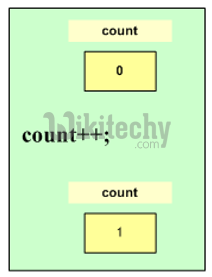
With this increment, the value of the variable becomes +1.
#include<stdio.h>
void main ()
{
int c = 10;
c++;
printf ('Increment integer c %d',c);
getch ();
}
What is Pre-Increment
If the increment operator ++ is placed before the operator variable like ++ c then it is called pre-increment.
In this, +1 is added to the value of the first operator ie variable. Then its value is used.
#include<stdio.h>
void main ()
{
int c = 10;
++c;
printf ('Increment integer c %d',c);
 Office 2019pro plus office 2019 product key oundo defrag 24 mulab 6.0.35 panda pro adobe photoshop cs2 v9.0 english avs video editor 9 ap pdf to image 4.3 Recent queries: nero 2016 wave editor office 2019 activate bandicut 2.8.2 serial number ccleaner bandicut serial number 2.802.8 Bowling Evolution 2.1 poizone daemon.tools.pro.v.8.0.0.0631. Serial Keys For All Software. Avast 6.0 License Key: W67A0910-4TZ59467 Avast 4.8 Professional EDT: Key: W933A0712-9F38B28T Avast 25 years serial key: W97A0910-8NB2E62T Avast internet security 6: W99L1167-U1AKZ2WF Avast 7.0 internet secuitry.
getch ();
}
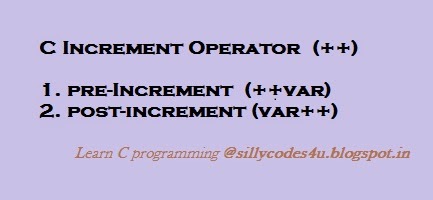
Like we have seen that both types have a variable value of +1. But what is the difference between pre and post-increment? For which they are used for different work.
What is difference between ++ i and i ++?.
The biggest difference between the two is that of expression and assignment statement. Through this, we can know the difference between them.
We will understand through the program what is the use of post-increment and what is the use of pre-increment.
Post-increment (i++)
#include<stdio.h>
void main ()
{
int a = 10;
int b;
b = a++;
printf ('value of a %d',a);
printf ('value of b %d',b);
getch ();
}
Post increment is used in this program. In which a = 10. And there is no value in b.
When b = a ++; Let's do it.Then the value of a comes in b. That means b = 10 will be 11.
The increment of a ++ will not come in b. The value of first a will come in b.
Pre-increment (++i)
#include<stdio.h>
void main ()
{
int a = 10;
int b;
b = ++a;
printf ('value of a %d',a);
printf ('value of b %d',b);
getch ();
}

Why use Increment Operator?
Pre Increment Operator
Increment And Decrement Operators